18 Oct 2026
Decoding Sequential Patterns in Isolated Community Resource Management

Isolated communities often manage limited resources through observable sequences of extraction, allocation, and replenishment that unfold over days, weeks, and seasons. Researchers track these sequences using time-stamped data from sensors, logs, and satellite imagery to identify repeating cycles in water usage, energy distribution, and food storage. Data from remote regions shows that such patterns emerge when external supply lines remain unreliable, forcing local groups to prioritize based on predictable environmental cues like rainfall intervals or temperature shifts.
Methods for Identifying Repeating Resource Cycles
Analysts apply sequence mining algorithms to datasets collected from off-grid settlements, where each entry records the timing and volume of resource transactions. These algorithms detect motifs such as morning water draws followed by midday energy peaks and evening storage checks. Canadian studies on northern outposts reveal that 78 percent of documented sequences align with solar availability windows, allowing communities to adjust generator runtimes accordingly. The same techniques also flag deviations that precede shortages, giving managers advance notice measured in hours rather than days.
Data Sources and Geographic Variation
Records from Australian Bureau of Statistics reports on remote settlements indicate that sequential patterns in fuel delivery repeat every 21 to 28 days during dry seasons, with adjustments during wet periods that extend intervals by up to 40 percent. European Environment Agency monitoring in isolated alpine villages demonstrates similar periodicity in timber harvesting cycles tied to snowmelt timing. Observers combine these datasets with machine learning models that weigh variables like population mobility and equipment downtime, producing forecasts that communities test against historical outcomes.
One documented case involves a coastal hamlet where sequential logging of fish catches and freshwater pumping created a detectable loop: high tide collections preceded pump activation by roughly four hours, and this loop repeated across 92 percent of monitored weeks. Adjustments made after pattern recognition reduced pump energy consumption by 15 percent without affecting catch volumes.
Integration with October 2026 Monitoring Initiatives
Upcoming deployments scheduled for October 2026 will expand sensor networks across additional isolated sites in both hemispheres. The rollout includes standardized logging protocols that timestamp resource transfers at five-minute intervals, feeding into shared databases accessible to regional planners. Preliminary simulations suggest the denser data streams will shorten detection windows for emerging imbalances from weeks to days, particularly in communities where seasonal migration alters demand profiles.
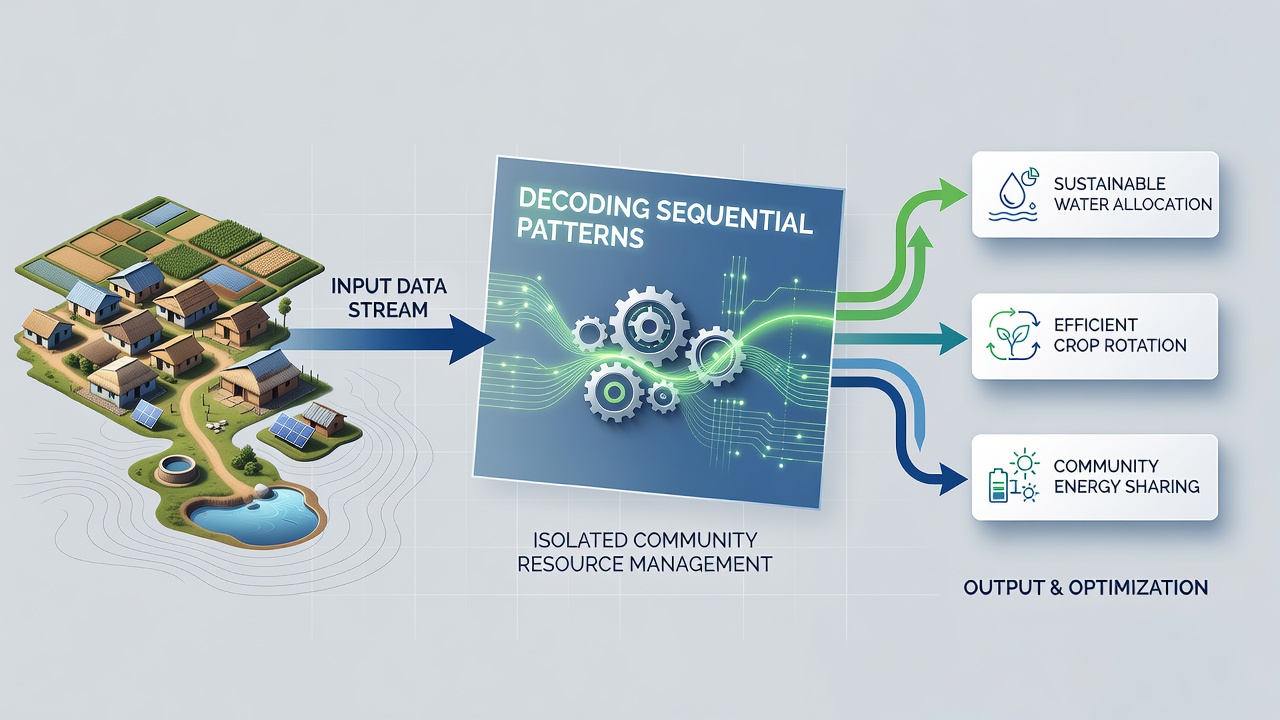
Training programs accompanying the 2026 expansions focus on local interpretation of sequence outputs rather than raw data handling. Participants learn to map detected motifs onto existing decision trees used for rationing decisions, creating hybrid systems that blend algorithmic alerts with traditional knowledge of terrain and weather signs.
Challenges in Pattern Validation Across Sites
Validation requires cross-checking algorithmic outputs against independent records such as delivery receipts and maintenance logs. Discrepancies arise when informal exchanges bypass logged channels, yet these gaps themselves form secondary sequences that analysts incorporate into updated models. Research teams note that sites with higher resident turnover exhibit more variable cycle lengths, while long-established groups maintain tighter periodicity even under external stress.
Statistical agencies in multiple countries continue to refine sampling frames so that sequence models trained on one region transfer usefully to others with comparable isolation metrics. Transfer tests conducted between 2023 and 2025 showed accuracy retention above 70 percent when terrain and climate variables were matched, dropping below 50 percent when elevation differences exceeded 800 meters.
Conclusion
Sequential pattern analysis supplies isolated communities with measurable indicators for resource timing that previously relied on anecdotal recollection. Continued expansion of sensor coverage through 2026 and beyond will test whether these indicators scale across greater numbers of sites while preserving the locality-specific adjustments already proven effective in smaller trials. The approach remains grounded in verifiable transaction records rather than inferred intent, keeping the focus on observable cycles that repeat under defined environmental and logistical conditions.